Mental Sketching Models
An AI-powered sketching application using a scaffolded approach to support users in learning sketching techniques and developing their creative skills, bridging advanced capabilities with traditional practices.
1. The Problem Space
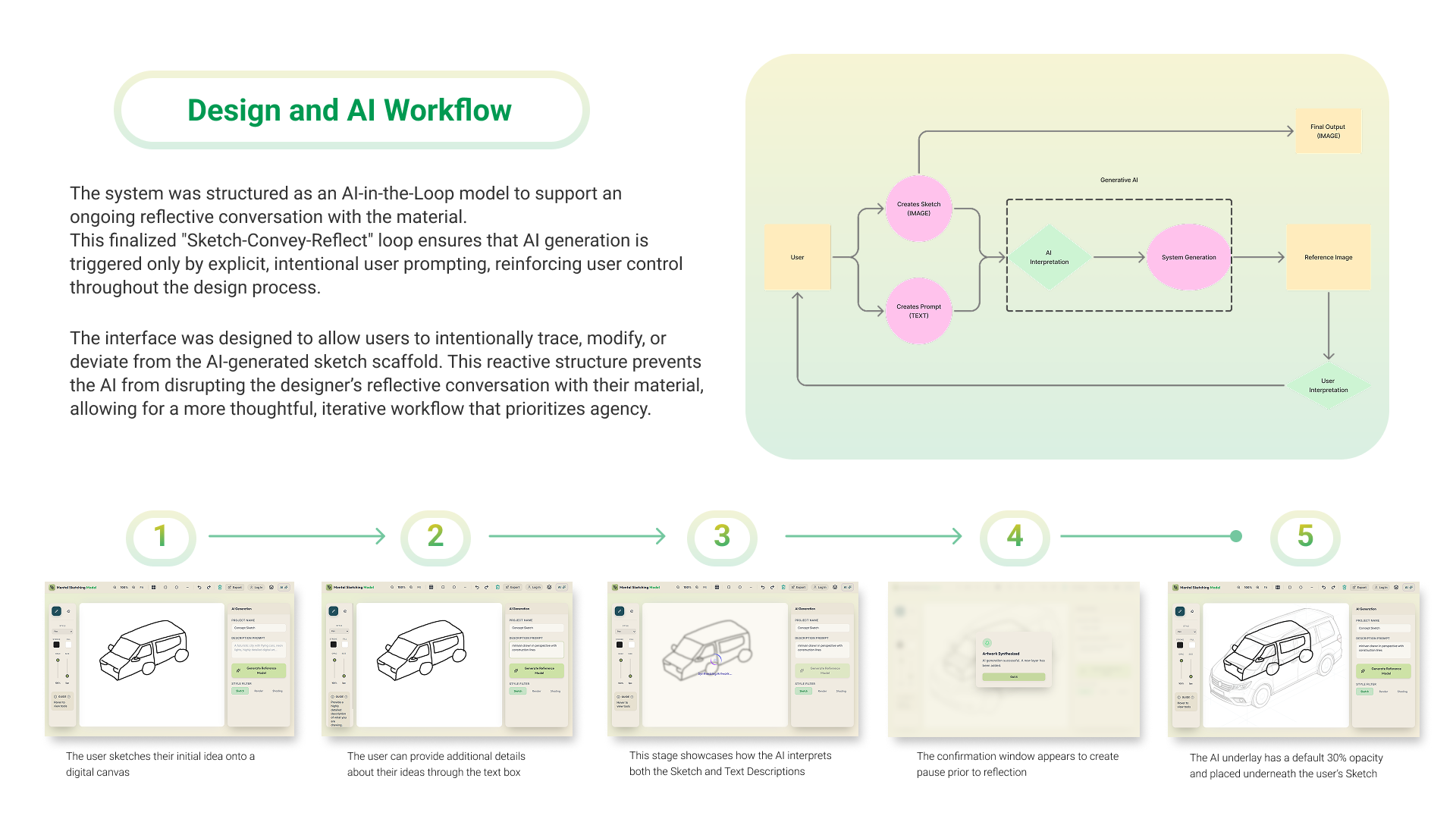
Learning to sketch involves steep cognitive barriers. Novices struggle to translate 3D spatial understanding into 2D representations. While generative AI can produce final images, it often bypasses the process of learning, removing human agency rather than augmenting it.
2. The Cognitive Framework
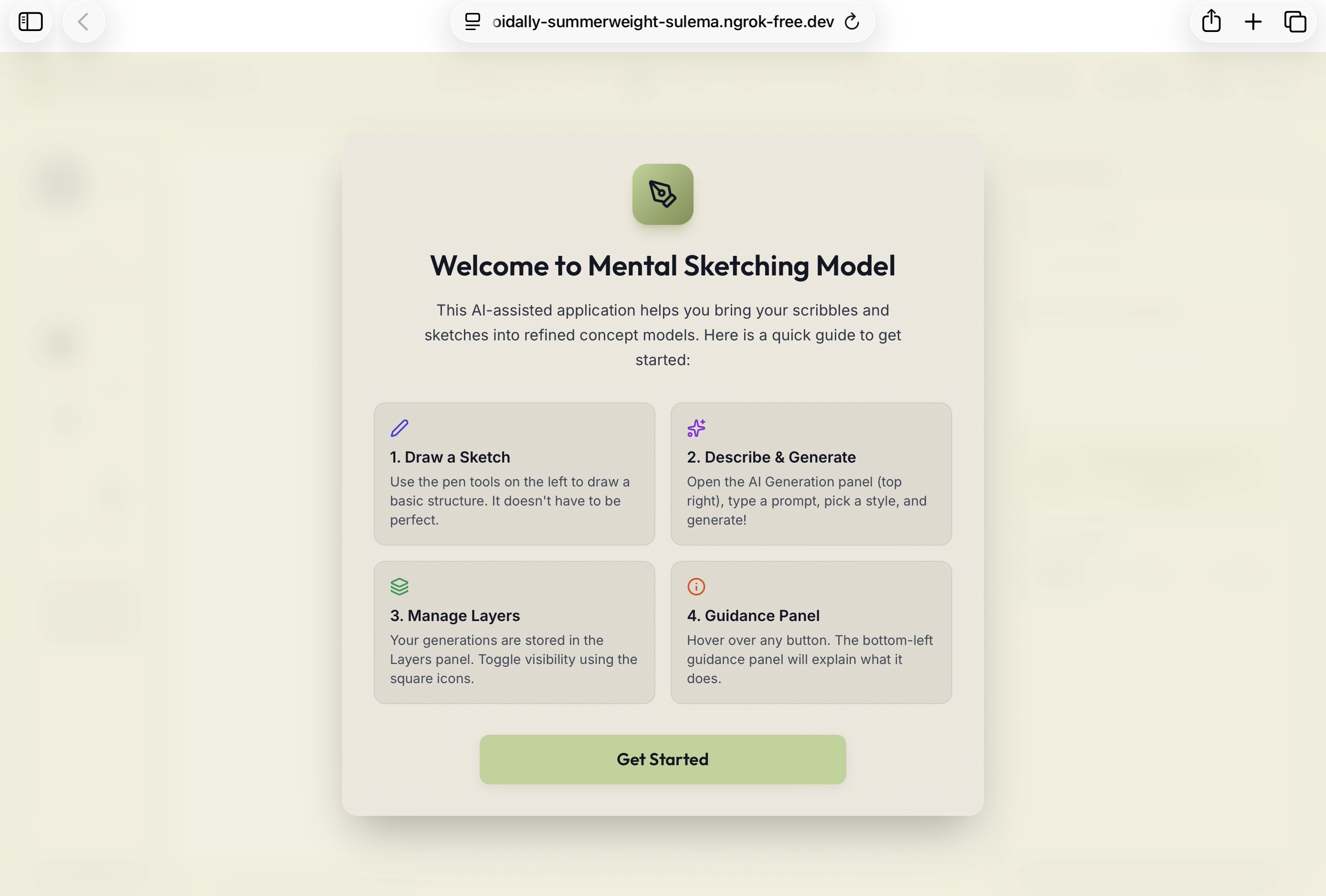
Grounded in Distributed Cognition and Reflective Learning, this project externalizes mental models to improve human agency. The application doesn't just draw for the user; it provides scaffolded visual references that reinforce the user's own cognitive processes.
Distributed Cognition
Offloading cognitive load to the digital canvas, allowing users to focus on technique rather than blank-page paralysis.
Reflective Learning
Creating a feedback loop where the AI suggests structural forms, prompting the user to reflect on and adjust their own stroke mechanics.
3. AI System Design & UX Prototyping
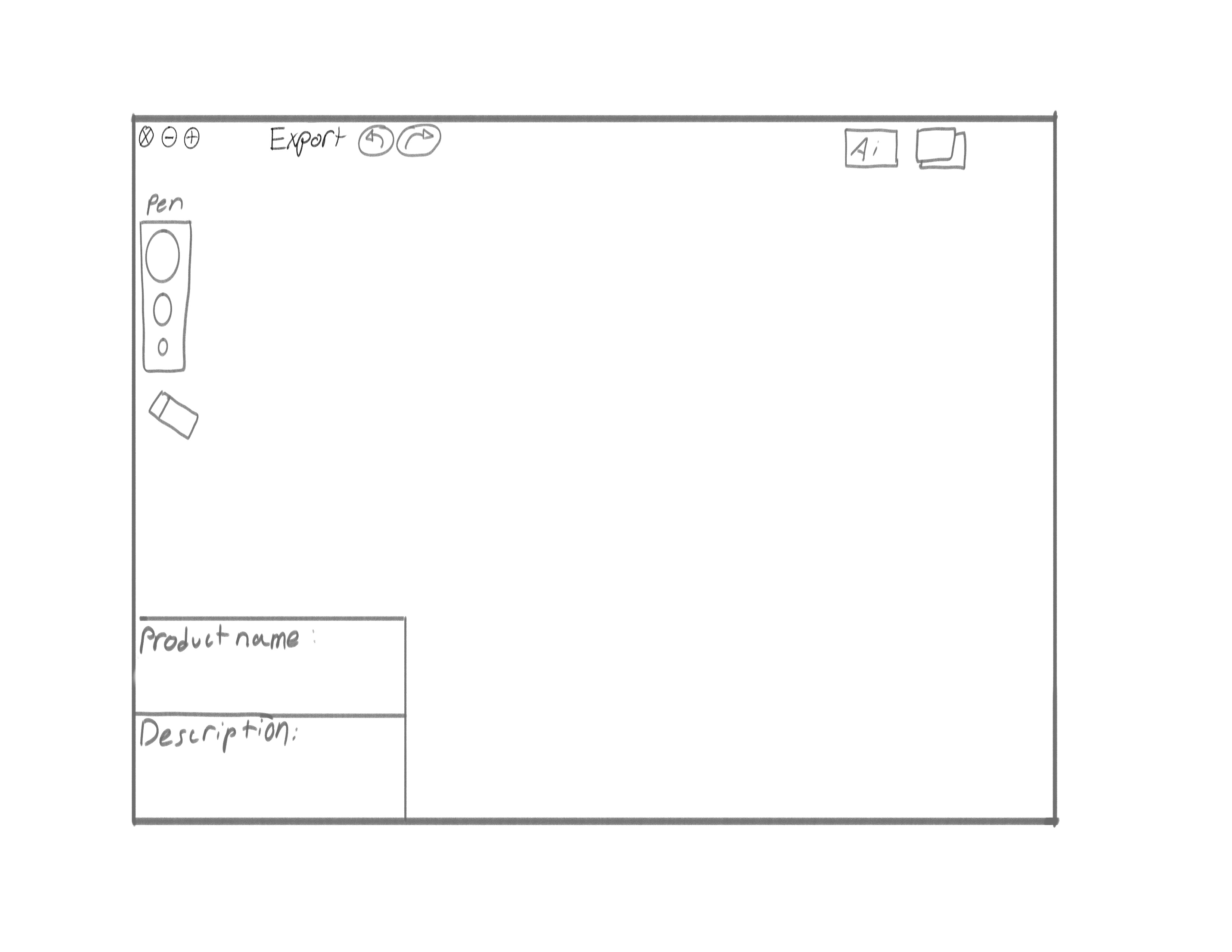
This section highlights the progression from a rough conceptual sketch into a functional digital application. I designed and prototyped the application through a formal thesis-based research process, starting with fundamental sketches to map out the cognitive interactions.
4. Proof of Concept
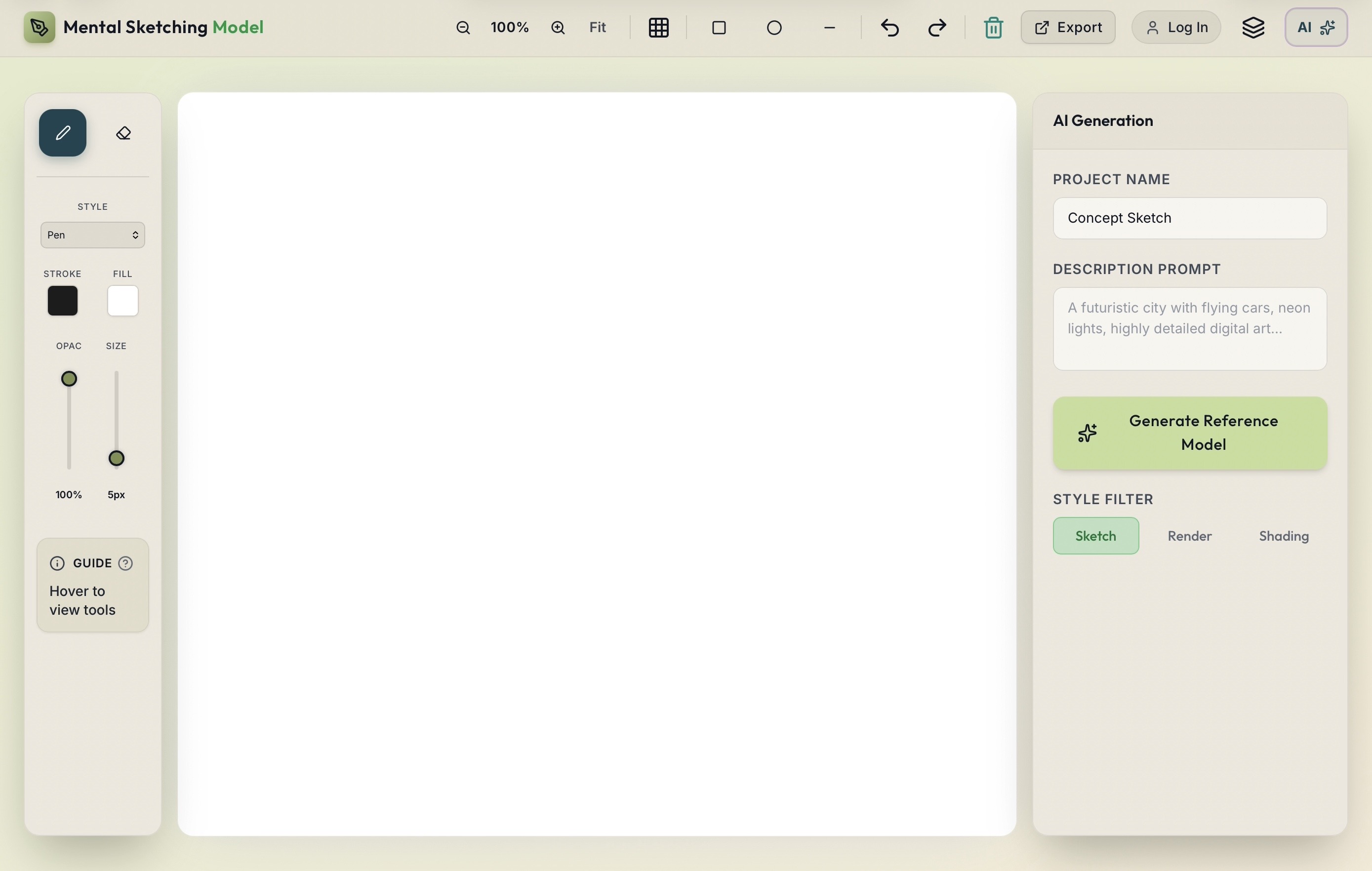
The application serves as a proof of concept for user control over sketching ideas and receiving iterative feedback. By allowing the user to seamlessly toggle between sketching modes, the system preserves their agency while providing varying levels of AI assistance.
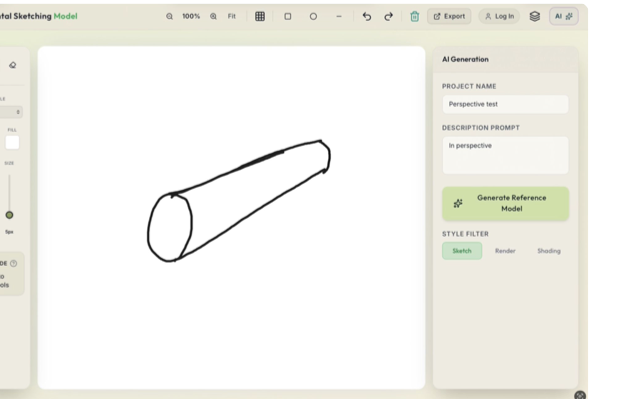
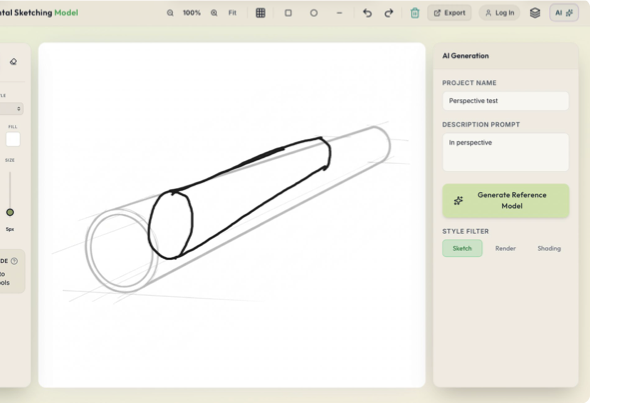
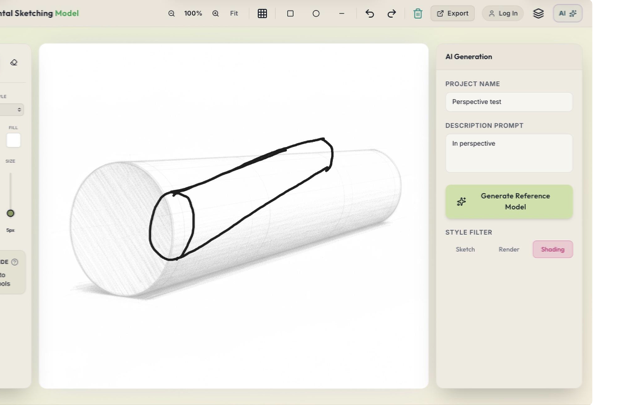
Academic Documentation
Review the Thesis Abstract
Explore the conceptual foundation of this project below.
View Abstract
Abstract
New designers adapt to use new tools and technologies, including artificial intelligence (AI). Use of AI currently requires designers to navigate a variety of platforms, applications or interfaces to produce their desired outcome. In the realm of sketching, AI-empowered tools like [18] have been developed to take drawings/sketches from novice designers and then produce the same work, albeit in higher fidelity with little to no additional effort on the part of the designer.
While such tools assist designers in sketching directly, they also impact the final design output and can potentially insert hallucinations or misinterpretations into the final outcome of the design process. The final outcome should be more authentic and true to the intentions of the designer’s Mental Model. This project proposes an alternative approach, where designers can intentionally limit how AI-influences the designers’ working file, by creating a generative AI reference layer for designers to model from.
In this Mental Sketching Model approach, the system takes user’s working sketch and textual prompts to generate an exemplar sketch on a separate layer—as a form of visual feedback or reference to support their own design intention and iteration. The aim of this work is to support the development of essential design skills, shifting the focus from using generative AI as a mere output to learning from it through scaffolding practices and improving cognitive design workflows.